Inside the Layers: How a Hazukido Croissant Is Made
Canadian butter and flour, fold after fold, and a long, cold rest. Here is what happens between the first fold and the crackle you hear when you bite in.
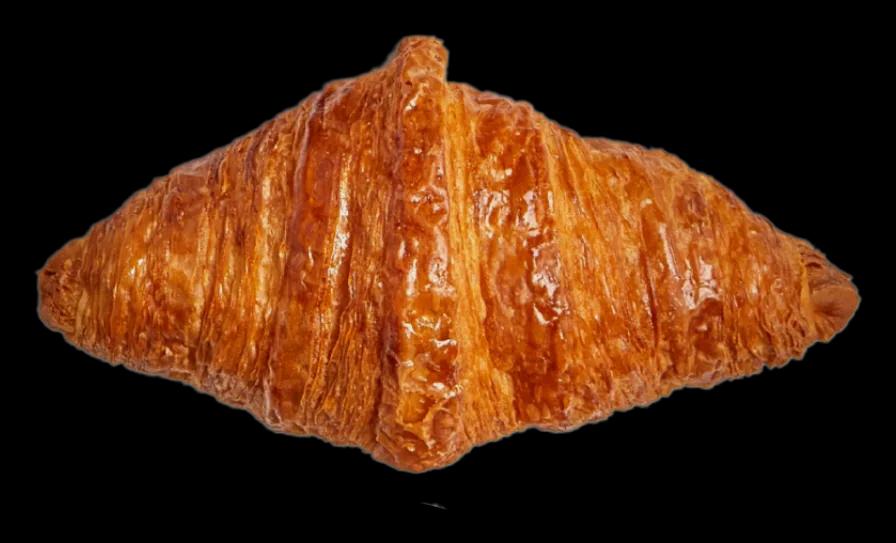
Cut a Hazukido croissant in half and the first thing you notice isn't the crust. It's the inside: an open lattice of thin, glassy walls and air pockets, like a cross-section of honeycomb. That crumb is the whole point of the brand — the original croissant is literally called the Honeycomb — and it doesn't happen by accident. It is the end of a slow, careful process.
It starts with three ingredients
A honeycomb croissant needs only three core ingredients, and at Hazukido Niagara all three are sourced in Canada.
- Canadian butter. The flavour of the croissant — and, in the oven, the steam that lifts the layers.
- Canadian flour. The structure: a dough strong enough for many folds and a long, cold rest.
- Canadian eggs. In the dough, in the custards, and in the glaze that turns the crust deep gold.
The butter is the flavour. The flour is the structure. Everything that follows is about keeping the two apart for as long as possible.
Folding: layer upon layer
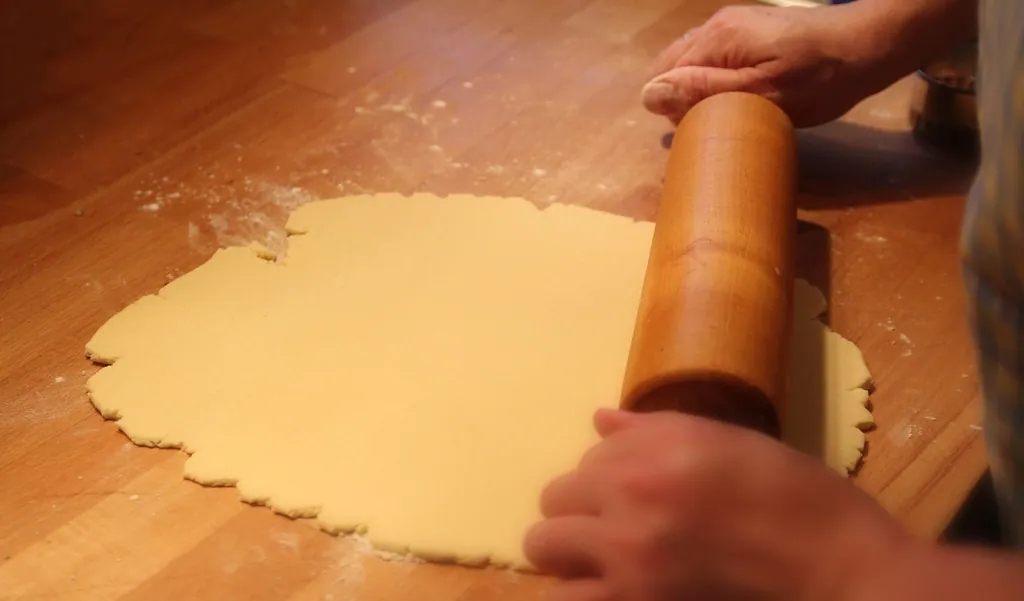
A croissant is a laminated dough: a block of cold butter is wrapped in dough, then rolled out and folded, again and again, so the butter is stretched into sheets between sheets of dough. Each fold multiplies the layers. Hazukido calls this its exclusive lamination technique; its Taiwanese site describes a "time-consuming multi-layer lamination" in a "golden ratio".
The difficulty is temperature. Butter that's too warm smears into the dough and the layers merge; butter that's too cold cracks and tears it. Precise folding keeps every layer intact, so that in the oven each one can separate cleanly.
The long, cold ferment
Here is where Hazukido's croissant parts ways with a quick commercial pastry. After lamination, the dough goes through what the brand calls a "long, low-temperature fermentation".
Two things happen during that slow rest. The yeast produces gas gradually, without the dough getting warm enough to soften the butter. And the dough develops strength and flavour — the same reason slow-fermented breads taste deeper than fast ones.
The honeycomb is the visible proof of patience: thin layers, held cold, given time.
In the oven: where the honeycomb appears
When a laminated croissant hits the heat, the water in each layer of butter turns to steam and pushes the dough layers apart. The fermented dough is strong enough to set around those pockets rather than collapse. The result, in Hazukido's words, is a croissant that is "crisp outside, soft inside" with a "perfect honeycomb structure".
Every Hazukido bakery bakes on site, every day, in limited quantities. The brand's shorthand for it is "20 mins freshly baked" — and its Taiwanese stores were known for queues wherever they opened.
Why the plain one matters
Most guests come for the fillings — caramel almond custard, milk caramel, fresh Niagara berries. But every flavour on the menu starts as the same honeycomb shell. If you want to taste the process itself, order the plain Honeycomb Croissant and eat it within the hour. You'll hear the crust before you taste the butter.
Making it last at home
Because the structure depends on crisp layers, moisture is the enemy. Eat croissants the day you buy them where you can. Hazukido's own guidance: up to 3 days in the fridge or 7 in the freezer, then 3–5 minutes in a 150°C oven and a 5-minute rest. Never the microwave — it turns those layers to steam from the inside. Our reheating guide has the full method, including from frozen.
Taste it
You'll find the Honeycomb Croissant, and the flavours built on it, at Hazukido Niagara inside Fallsview Casino Resort. See the full menu or plan your visit.